9/11 war ein Inside-Job

Wie realistisch ist das bitte?

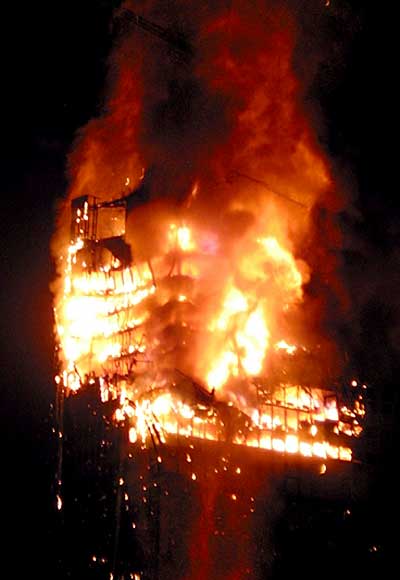
Eigentlich gar nicht. Wären tatsächlich Bürobrände die Einsturzursache, hätte der Einsturz gar nicht symmetrisch verlaufen dürfen, sondern zu der Seite hin, wo die Brandschäden am größten waren.
 
Werbung:
Es gibt doch noch viele andere lustige Aspekte. Im Moment ist Attas wie durch ein Wunder hängengebliebener Reisekoffer mein Favorit - the one and only, der es an diesem Tag nicht ins Flugzeug schaffte. Vor allem, was drin war. :)


Ach... da gibts so viele Verrücktheiten. Mal abgesehen von den Physikalischen bestand ja auch der Rest des Tages aus Zufällen über Zufällen. Du nennst schon einen, aber witzig ist ja auch, das Flugschreiber nicht zu finden sein sollen, aber 2 Hijacker-Pässe gefunden wurden...

Oder eine Andrews-Airforce-Base die zuerst mal verschwiegen wird. Dann soll sie gar keine Flugzeuge haben. Dann wurde behauptet, sie seien im Eifer des Gefechts so gut wie unbewaffnet hochgeschickt worden, und hätten darüber nachgedacht Flug 93 zu rammen. :D

Oder die ganzen Übungen an dem Tag. Inputs (Simulationen) auf Radarschirmen, gekidnappte Flugzeuge die genau in Radarlöchern ihre Transponder ausschalten... diese Hijacker hatten sowas von Glück. ;)

Von einer andere Air-Force-Base starteten dann Maschinen, aber flogen in die falsche Richtung. Selbst Spiegel-Online gibt zu: Was da passiert ist, konnte bis heute nicht wirklich geklärt werden. Dummer Zufall eben.

Und während die ganzen Abfangjäger verschollen waren oder einfach keine Lust hatten oder die falsche Richtung nahmen, flogen über den Tatorten Dommsday-Maschinen herum (wird auch fliegendes Pentagon genannt).

Alleine die Liste der Zufälle und Unmöglichkeiten wäre wohl ein Buch.
 
Das hat nichts mit Intelligenz zu tun würde ich sagen. Eher damit wie man sucht. Du hast alle 911-Seiten gemieden, aber da stehen Details die Du dann in Google eingeben kannst um sie zu verifizieren.
Eigentlich nicht, ich bin gerade zu dazu gezwungen mich mit den Seiten auseianderzusetzen, und tu es immer noch, aber ich kann dir zumindest bestätigen das ich tatsächlich keine Suchmaschine bedienen kann.
Trotzdem verstehe ich nicht so ganz was so spannend an diesen Wissenschaftern sein soll. Was bitte ist der Hinderungsgrund das ganze verständlich der breiten Öffentlichkeit darzulegen? Es kann ja nicht sein das man Wissenschafter erst dann zu schätzen weiss, wenn sie ausgelacht und diskreditiert werden.
 
Eigentlich nicht, ich bin gerade zu dazu gezwungen mich mit den Seiten auseianderzusetzen, und tu es immer noch, aber ich kann dir zumindest bestätigen das ich tatsächlich keine Suchmaschine bedienen kann.
Trotzdem verstehe ich nicht so ganz was so spannend an diesen Wissenschaftern sein soll. Was bitte ist der Hinderungsgrund das ganze verständlich der breiten Öffentlichkeit darzulegen? Es kann ja nicht sein das man Wissenschafter erst dann zu schätzen weiss, wenn sie ausgelacht und diskreditiert werden.

Wer soll denn sonst diese Themen überhaupt anpacken? Es gab sofort viele, die sagten, die Türme seien nie im Leben wegen der Feuer eingestürzt. Aber die haben natürlich keine Autorität. Über die Jahre haben sich dann aber immer mehr Wissenschaftler und Ingenieure damit befasst, v.a. als klar wurde wie beschissen die offiziellen Untersuchungen arbeiten und in welch massiven Interessenkonflikten sie stehen. Sie gründeten eine Vereinigung und tragen seitdem Fakten zusammen... und dazu gehörten auch die Staubanalysen.

Und warum sind sie interessant? Genau deshalb... so einfach ist das. Diese Wissenschaftler und Ingenieure haben so viel zur Aufklärung geleistet wie sonst wohl niemand (und damit meine ich lange nicht nur die Staubanalysen). Sie haben die vielen und extremen Fehler in den offiziellen Untersuchungen aufgedeckt und sie vermitteln ihr Wissen ja möglichst so, dass es auch für jemanden wie Dich oder mich verständlich wird.

Aber logisch ist auch: Es wird versucht sie zu diskreditieren. Denn die Erde ist nicht rund, die ist ne Scheibe... alles andere muss unwahr sein.
 
Wäre das nicht etwas fahrlässig ein Gebäude so zu bauen, das es zur Seite knickt?

Es wäre eher fahrlässig, überhaupt ein Gebäude zu bauen, die wegen Feuer einstürzen. Ist nämlich auch ein Novum... gabs vorher nie und später auch nie. An 9/11 gleich drei.

Ein paar Beispiele:

Brand:

pantsfire%202.jpg


Steht noch (Der Knick ist architektonisch gewollt und war auch vorher schon da):

154675d1271601518-chinese-new-year-2009-hotel-fire-beijing-february-2009-fire_damaged_tvcc_building2.jpg


*******************

Brand:

windsor7.jpg


Steht auch noch (steht sogar nen Kran drauf) :

torrewindsoresqueleto.jpg
 
Das ist alles irrelevant. Ja, ich glaube zwar, dass sie die Freifall-Phase kannten und unterschlagen haben. Aber das ist spekulativ.

Es reicht zu wissen, dass sie sie eben nicht berechnet haben.
Das heißt deine gesamte Argumentation basiert im Prinzip darauf, ob man es "suspekt" findet oder nicht, dass man die Entwicklung der Geschwindigkeit des Zusammensturzes im Draft der Publikation nicht drinnen hatte. Sorry, aber das ist kein Argument mehr, das ist ein Witz. Wenn du das noch ernst meinst, dann argumentierst du hier nicht mehr, du führst schlichtweg einen Glaubenskrieg.

Und dazu kommt, was noch wichtiger ist:

SIE HABEN KEINE ERKLÄRUNG DAFÜR IN IHREM BERICHT!
Du behauptest also, dass NIST keine Erklärung dafür in ihrem Bericht hat. Auch das ist leider falsch. In 12.6 (p.603) haben sie eine kurze Zusammenfassung der key facts. Dann erklären sie, was das auslösende Ereignis war ("Initial Local Failure for Collapse Initiation"), danach erklären sie, wie sich das auslösende Ereignis in den ersten Sekunden ausgewirkt hat ("Vertical Progression of Failure") und danach erklären sie, wie der "richtige" Zusammensturz (nach unten) stattgefunden hat ("Horizontal Progression of Failure") und am Schluss machen sie erläuternde Anmerkungen bzgl. dem Zusammensturz ("Global Collapse").

Ganz ehrlich, ich sehe hier kaum noch Sinn zu diskutieren.
Du verbreitest hier seit Seiten nur noch Lügen und Unwahrheiten, schmeißt wie wild mit Behauptungen und Beschuldigungen um dich, und hast den Bericht, auf den sich all das bezieht nicht einmal ansatzweise gelesen. Wie wärs, wenn du mal eine Runde mit dem Rumgekeife aufhörst und dir einfach 20 Minuten Zeit nimmst, zumindest die 8 Seiten, um die es momentan geht, zu lesen, und danach kompetente Aussagen darüber machst und nicht nur Behauptungen, die deiner Unwissenheit entspringen? Damit sparst du allen Beteiligten Zeit.

sirianer schrieb:
Ich gebe nochmals einige Punkte als Hilfe:
Ich würd mich freuen, wenn du Fragen stellst, die in den letzten 100 Seiten nicht schon geschätzte zwei Dutzend mal beantwortet worden sind.

Tommy schrieb:
Eigentlich gar nicht. Wären tatsächlich Bürobrände die Einsturzursache, hätte der Einsturz gar nicht symmetrisch verlaufen dürfen, sondern zu der Seite hin, wo die Brandschäden am größten waren.
Wenn es nur einen vereinzelten Brandherd gegeben hätte, dann wäre das Gebäude gar nicht erst eingestürzt. Es gab dauerhafte Brände auf den Etagen 7, 8, 9, 11, 13, vermutlich Brände auf den Etagen 5 und 6 und kurze Brände auf den Etagen 19, 22, 29, 30. Und jetzt mal logisch nachdenken: Das Feuer dort hat etwa 6 Stunden gebrannt. Feuer braucht neben Sauerstoff etwas zum Brennen. Wenn ein dauerhaftes Feuer also angefangen hat zu brennen, ist irgendwann das Brennmaterial weg - es breitet sich also über das gesamte Stockwerk aus, weil an der Stelle, wo das Feuer begonnen hat kaum noch brennbares Material ist. Wer sich die Mühe machen würde, den NIST-Bericht zu lesen anstatt hier weiter rumzuspekulieren, würde diese Informationen mitsamt hübscher Grafiken die die Ausbreitung des Feuers zeigen in Chapter 9 finden. In Chapter 11.6 kann man auch kurz zusammengefasst lesen, wie die diversen Schäden im Endeffekt zum "initiating event" des Zusammenbruchs führten.


Man hat irgendwie hier das Gefühl, keiner ist wirklich daran interessiert, was wirklich passiert ist, wenn sich hier jeder plötzlich aufspielt als wäre er seit 20 Jahren Bauingenieur, aber keiner sich die Mühe macht, das umfassendste und detailreichste Stück Literatur zum ganzen Vorfall auch nur ansatzweise zu Gemüte zu führen.
 
Das heißt deine gesamte Argumentation basiert im Prinzip darauf, ob man es "suspekt" findet oder nicht, dass man die Entwicklung der Geschwindigkeit des Zusammensturzes im Draft der Publikation nicht drinnen hatte. Sorry, aber das ist kein Argument mehr, das ist ein Witz. Wenn du das noch ernst meinst, dann argumentierst du hier nicht mehr, du führst schlichtweg einen Glaubenskrieg.
Nein, das ist kein Glaubenskrieg, zumindest nicht von meiner Seite. Du schreibst ja selbst.... "dass man die Entwicklung der Geschwindigkeit des Zusammensturzes im Draft der Publikation nicht drinnen hatte."

Das ist ein ganz einfacher Fakt und nicht der einzige dicke Fehler. Und ja, ich persönlich finde diese Masse an schweren Fehlern sehr suspekt, und würde sagen: Mit der Masse anderer Unterlassungen, Lügen und Vertuschungen kann man in Deinen eigenen Worten sagen:

Crackpot-Wissenschaft... oder auch "Junk-Paper". ;)


Du behauptest also, dass NIST keine Erklärung dafür in ihrem Bericht hat. Auch das ist leider falsch. In 12.6 (p.603) haben sie eine kurze Zusammenfassung der key facts. Dann erklären sie, was das auslösende Ereignis war ("Initial Local Failure for Collapse Initiation"), danach erklären sie, wie sich das auslösende Ereignis in den ersten Sekunden ausgewirkt hat ("Vertical Progression of Failure") und danach erklären sie, wie der "richtige" Zusammensturz (nach unten) stattgefunden hat ("Horizontal Progression of Failure") und am Schluss machen sie erläuternde Anmerkungen bzgl. dem Zusammensturz ("Global Collapse").

Da es für Dich ja sehr schwer ist, die entsprechenden Auszüge, die die Freifall-Phase erklären, rauszukopieren, mache ich das mal für Dich. Wegen Zeichenmangel im nächsten Post.


Ganz ehrlich, ich sehe hier kaum noch Sinn zu diskutieren.
Du verbreitest hier seit Seiten nur noch Lügen und Unwahrheiten, schmeißt wie wild mit Behauptungen und Beschuldigungen um dich, und hast den Bericht, auf den sich all das bezieht nicht einmal ansatzweise gelesen. Wie wärs, wenn du mal eine Runde mit dem Rumgekeife aufhörst und dir einfach 20 Minuten Zeit nimmst, zumindest die 8 Seiten, um die es momentan geht, zu lesen, und danach kompetente Aussagen darüber machst und nicht nur Behauptungen, die deiner Unwissenheit entspringen? Damit sparst du allen Beteiligten Zeit.
Ich versuche gerade, Zeit zu sparen, da Du es bisher nicht geschafft hast die entsprechenden Stellen einfach zu kopieren. Wenn das was ich behaupte falsch ist, und die da tatsächlich erklären, wie es zur Freifall-Phase kam... dann spar uns doch jetzt auch ein bisschen Zeit und markiere die entsprechenden Stellen oder kopiere sie aus meinem raus.


Man hat irgendwie hier das Gefühl, keiner ist wirklich daran interessiert, was wirklich passiert ist, wenn sich hier jeder plötzlich aufspielt als wäre er seit 20 Jahren Bauingenieur, aber keiner sich die Mühe macht, das umfassendste und detailreichste Stück Literatur zum ganzen Vorfall auch nur ansatzweise zu Gemüte zu führen.
Du redest Quatsch. Ich z.B. bin sehr interessiert daran herauszufinden was wirklich passierte. Und ich habe auch brav gelesen. Aber anscheinend verstehst Du da so vieles besser.... Also... im nächsten Post der gesamte Text.
 
Hier ist der komplette Text, von dem Du sagst, er erkläre die Freifall-Phase.
Wie Du siehst, habe ich mir sogar Mühe gegeben die textliche Übersichtlichkeit zu wahren. Du musst nur noch fett markieren, wo erklärt wird, wie es zur Freifall-Phase kam.

Ich sehe da nämlich nichts, außer der Feststellung das es sie gab.


*******************


AUSZUG NIST REPORT


SUMMARY OF FINDINGS

A global finite element model of WTC 7 was developed using LS-DYNA to calculate the structural response of WTC 7 to a fire-induced initial failure event and to determine the sequence and timing of the events that led to the global collapse of the building. Four simulations were performed with this model.

• The first was based on NIST's best estimate of both the debris impact damage from WTC 1 and the fire-induced damage, from the ANSYS analysis. This occurred at 4 h in the ANSYS computation.

• The second simulation differed only in the input of a lesser degree of fire-induced damage at 3.5 h in the ANSYS computation. The purpose of this simulation was to determine whether a lesser degree of fire-induced damage could lead to the collapse of WTC 7.

• The third simulation was the same as the first, except that no debris impact damage was included. The purpose of this analysis was to determine the contribution of debris impact to the WTC 7 global collapse sequence and whether WTC 7 would have collapsed solely due to the effects of the fires.

• In the fourth simulation, the building experienced no debris or fire-induced damage. A section of Column 79 between Floors 11 and 13 was removed. The purpose of this analysiswas to determine the potential for a classic progressive collapse, i.e., disproportionate structural damage from a single failure, regardless of the cause of that failure.
The following are the principal findings from these simulations.

• The best estimate simulation led to global collapse of WTC 7 and provided a reasonable sequence and timing of the events leading to the initiation of global collapse. As expected, there were some deviations from the observable evidence at computation times after the global collapse was underway.

• The simulation with identical debris impact damage, but reduced fire damage, did not lead to a collapse-initiating event or to collapse itself. This result indicated that the debris impact damage, by itself, was not sufficient to initiate global collapse. It also indicated that the long duration of the multiple floor fires was the primary cause of the eventual collapse.

• The simulation with the same fire-induced damage as the best estimate simulation, but with no debris impact damage, identified the same initiating event and timing of that event as did the best estimate simulation. This simulation also led to global collapse of the building, further indicating that the debris impact damage was not a principal contributor to the occurrence of collapse. However, the mechanics of the collapse differed from the best estimate simulation in the later stages of the horizontal progression of failure.

• WTC 7 was prone to classic progressive collapse in the absence of debris impact and fire- induced damage when a section of Column 79 between Floors 11 and 13 was removed. The collapse sequence demonstrated a vertical and horizontal progression of failure upon the removal of the Column 79 section, followed by buckling of exterior columns, which led to the collapse of the entire building.

The simulations supported the leading collapse hypothesis and provided the following additional insights into the sequence of events leading to the global collapse of WTC 7. Except as noted, these findings were derived from the best estimate simulation.


Initial Local Failure for Collapse Initiation

  • The collapse of Floor 13 onto the floors below, some of which were already weakened by fires, triggered a cascade of floor failures in the northeast region of the building.

  • The floor failures progressed down to Floor 5, where debris accumulated, and spread across the east floor area, due to the effects of impact loads from falling debris on thermally weakened floor areas.

  • Critical Column 79 became laterally unsupported between Floors 5 and 14 in the east-west and south directions as a result of the progression of floor system failures. There was still some lateral support in the north direction at Floors 8 to 12 and Floor 14, as the erection bolts in the seated connections had all failed at these girder ends, but the girders had not walked off the bearing seat.

  • The increase in unsupported length led to the buckling failure of Column 79, which was the collapse initiation event for WTC 7.


Vertical Progression of Failure

• Once Column 79 buckled between Floors 5 and 14, the column section above began to descend. Column 79 began moving downward at the roof level approximately 0.2 s after Column 79 buckled and 0.6 s before Column 80 buckled.

• As Column 79 moved downward, the floor framing adjacent to Column 79 was pulled downward up to the roof and east penthouse, which led to the observed kink in the east penthouse roof framing on the north side.

• As Column 79 moved downward, the floor framing connections to interior Columns 76 and 80 and exterior Column 44 failed under increasing tensile in-plane floor forces, resulting in a vertical progression of failure of the floor systems around Column 79.

• Column 80 became laterally unsupported in both directions between Floors 5 and 15, as a result of the progressive floor system failures. Column 80 buckled about 0.7 s after Column 79 buckled.

• Column 81 became laterally unsupported in both directions between Floors 7 and 15, as a result of the progressive floor system failures. Column 81 buckled about 1.3 s after Column 79 buckled.

• As Columns 79, 80, and 81 each buckled, their column sections above Floor 14 began to descend downward and pulled the floor structures downward with them, thereby creating a vertical progression of floor collapses that spread across the entire east region of WTC 7.

• The east penthouse, which was supported by Columns 79, 80, and 81, fell downward.


Horizontal Progression of Failure

• Interior column buckling failures continued to propagate across the core in the lower floors from east to west, due to (1) loss of lateral support from floor system failures, (2) impact of falling debris from adjacent floors and columns, and (3) load redistributed from other buckled columns.

• During the vertical progression, the falling floors pulled on adjacent columns until the floor connections failed on the east side of Columns 76, 77, and 78.

• Truss 2 collapsed due to accumulated weight and impact loads from falling debris. The collapse of Truss 2 precipitated the buckling of Columns 77 and 78, which together with Column 76 had already lost lateral support.


• The occurrence of this westward progression indicates that the failure of Truss 2 was not essential to the failure of Columns 77 and 78, as they would have buckled in a similar fashion as the other columns.

• The horizontal progression of failure was sensitive to the extent of the estimated initial structural damage in WTC 7 due to debris impact from the collapse of WTC 1.


For the debris impact damage scenario, some of the interior columns on the west began buckling as the horizontal progression of interior column failures approached the middle of the core. For example, the middle line of interior columns directly behind the initially severed exterior columns buckled before the two north-south lines of columns immediately to their east. The middle line of interior columns lost lateral support in the north-south direction over 11 floors in response to the structural damage that was imposed.

For the no debris impact damage scenario, the horizontal progression of column failures occurred in order from east to west after collapse initiation (i.e., buckling of Column 79) and the vertical progression of failures on the east side. This scenario matched the observations where the screenwall on the roof fell downward before the west penthouse. This suggests that the damage scenario that was imposed in the best estimate analysis was slightly more severe than actually occurred.


Global Collapse

  • The exterior column failures were sensitive to the extent of the estimated initial structural damage in WTC 7 due to debris impact from the collapse of WTC 1.

For the debris impact damage scenario, the exterior column buckling began at the southwest corner Column 14, adjacent to the WTC 1 debris impact zone, between Floors 10 and 12. The exterior columns adjacent to the (seven) columns severed in the southwest region due to the collapse of WTC 1 were the first to buckle because additional load was distributed to them as a result of the damage. The analysis with debris impact damage closely simulated the observed failure of the exterior façade, where the façade moved downward as a single unit.

For the no debris impact damage scenario, the exterior columns buckled near mid-height of the building, approximately between Floors 17 and 29. If the exterior columns had buckled at mid-height, it would have been visible in the videographic records. The analysis without debris impact damage did not closely simulate the observed failure of the exterior façade.


  • The observed behavior of the exterior columns during the global collapse was more closely simulated by the analysis with debris impact damage.

  • As the interior columns buckled at the lower floors and the corresponding upper column sections began to move downward, the exterior columns buckled inward at the lower floors as a result of floor pull-in forces caused by the downward movement of the building core. The floor connections to the columns had not yet failed in this region, as there were no fires observed on the west side of Floors 10 through 14 at any time during the day, so the floors were intact and able to pull the exterior columns inward.

  • The south and west exterior columns buckled first, followed by the north and east face columns.

  • All exterior columns buckled between approximately Floors 7 and 14.

  • Once column support was lost in the lower floors, the remaining exterior structure above began to fall vertically as a single unit.

  • WTC 7 was prone to classic progressive collapse in the absence of fire-induced damage and debris impact damage when a section of Column 79 between Floors 11 and 13 was removed. The collapse sequence demonstrated a vertical and horizontal progression of failure upon the removal of the Column 79 section, followed by downward movement at the roofline due to buckling of exterior columns, which led to the collapse of the entire building.

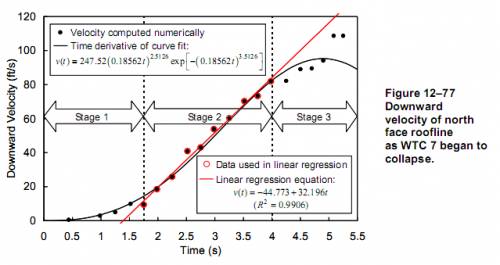
  • The observed descent time of the upper 18 stories of the north face of WTC 7 (the floors clearly visible in the video evidence) was 40 percent greater than the computed free fall time. A more detailed analysis of the descent of the north face found three stages: (1) a slow descent with acceleration less than that of gravity that corresponded to the buckling of the exterior columns at the lower floors, (2) a freefall descent over approximately eight stories at gravitational acceleration for approximately 2.25 s, and (3) a decreasing acceleration as the north face encountered resistance from the structure below.

http://www.nist.gov/customcf/get_pdf.cfm?pub_id=861611

*******************

 
Werbung:
Hier ist der komplette Text, von dem Du sagst, er erkläre die Freifall-Phase.
Wie Du siehst, habe ich mir sogar Mühe gegeben die textliche Übersichtlichkeit zu wahren. Du musst nur noch fett markieren, wo erklärt wird, wie es zur Freifall-Phase kam.

Ich sehe da nämlich nichts, außer der Feststellung das es sie gab.
Ähm ... eine kleine Frage. Hier die Grafik des Zusammenbruchs:
155958691.jpg

Kannst du nachvollziehen, warum der Zusammenbruch anfangs langsam war und dann (in Phase 1) exponentiell schneller wurde?
 
Zurück
Oben